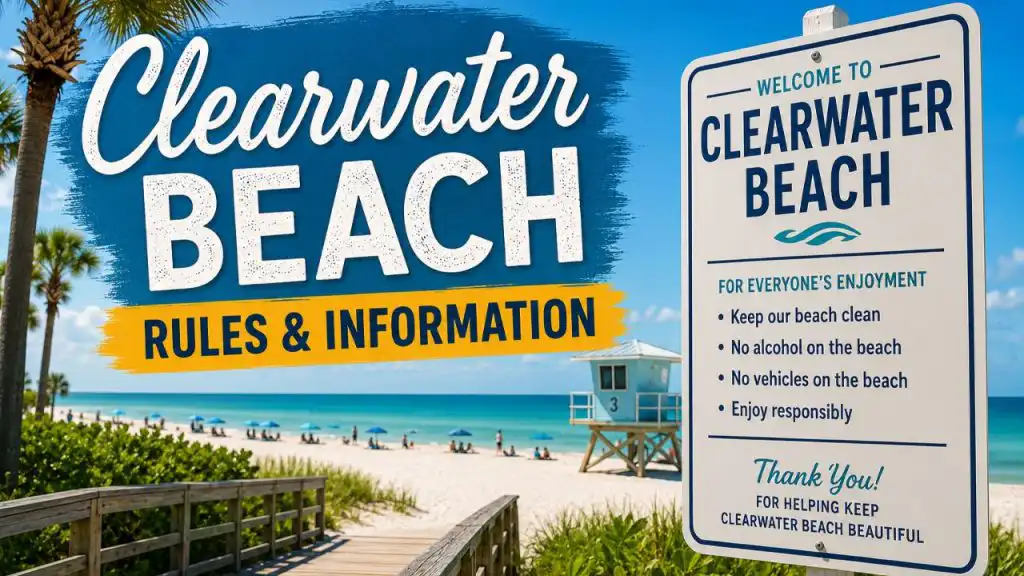
Every year, first-time visitors show up to Clearwater Beach with a cooler full of beer, a dog on a leash, and a drone tucked under their arm — and every year, they get a fast introduction to why that was a bad plan.
Clearwater Beach has real rules, and they’re actively enforced. Knowing them ahead of time saves you the embarrassment of being told to pack up and leave, or worse, a fine you didn’t expect.
This guide covers everything you need to know before you set foot on the sand — from what you can’t bring to how parking actually works to where dogs are (and aren’t) welcome.
Quick Overview: What’s Allowed and What Isn’t
Before getting into the details, here’s a straight answer to the questions people search most:
| What | Allowed? |
|---|---|
| Alcohol on the beach | ❌ No |
| Glass containers | ❌ No |
| Smoking | ❌ No |
| Pets (main beach) | ❌ No (service animals only) |
| Dogs (North Beach, north of Somerset St.) | ✅ Yes, on leash |
| Fires and bonfires | ❌ No |
| Camping or sleeping on beach | ❌ No |
| Surfboards/watercraft beached in swim area | ❌ No |
| Drones | ❌ No (without written permission) |
| Fishing in swim zones | ❌ No |
| Boating/jet skis inside Safe Bathing Limit | ❌ No |
| Motorized vehicles/e-bikes on Beach Walk | ❌ No (except medical devices) |
| Beach chair and umbrella rentals | ✅ Yes (city-authorized vendor) |
| Beach wheelchairs | ✅ Yes (free, provided by the city) |
| Metal detectors | ⚠️ Permit required |
Clearwater Beach Alcohol Rules
No alcohol on the beach. That’s the rule, and it’s enforced.
Consuming alcohol — or arriving visibly intoxicated — on Clearwater’s public beach is prohibited under city ordinance. This applies to the sand, the shoreline, and adjacent public areas. It doesn’t matter if it’s in a solo cup or a water bottle. Local law enforcement and beach patrol actively enforce this..
No Smoking on Clearwater Beach
Smoking is prohibited on Clearwater Beach’s public sands. This includes cigarettes, cigars, and vaping. If you need to smoke, you’ll need to head back to the street or to designated areas away from the beach.
This is fairly standard for Florida’s popular beaches at this point, so it shouldn’t come as a shock. The no-smoking rule also applies to the beach access areas and promenades closest to the sand.
Are Pets Allowed at Clearwater Beach?
This is one of the most commonly misunderstood things about Clearwater Beach — and it trips up a lot of dog owners.
The main public beach: no dogs allowed. The only exception is trained service animals. Per the U.S. Department of Justice definition, service animals are dogs individually trained to do work or perform tasks for people with disabilities — not emotional support animals or pets in vests. This rule applies to the full public bathing area, from the jetty near Pier 60 up through the central stretch of beach.
North Beach is a different story. Dogs are permitted on the section of beach north of Somerset Street. They must stay on a leash at all times, and you’re expected to clean up after them. This area is more low-key than the main beach — fewer amenities, no nearby restrooms or outdoor showers — but if your dog needs a beach day, that’s the spot.
If you’re specifically looking for a place where your dog can run off-leash in the water, Honeymoon Island State Park in Dunedin (about 30 minutes away) has a dedicated dog beach, and Fort De Soto Park in Tierra Verde (about 45 minutes away) has one of the best dog beaches in the Tampa Bay area, with a large off-leash section. Both are worth the drive if your dog is the whole reason you’re making the trip.
Other Rules and Restrictions
Water Sports and Watercraft on the Beach
Surfboards, sailboats, motorboats, personal watercraft, and other singular hard-surfaced objects cannot be beached in the public bathing area of Clearwater Beach. If you’re a surfer, paddleboarder, windsurfer, or skimboarder, those activities need to happen outside the designated swim zone or on North Beach past Somerset Street. The main bathing area is for swimmers — not boards.
No Glass Containers
Glass is prohibited on the beach. Broken glass in sand is a real hazard — for bare feet, for kids, and for the environment. Pack canned drinks or plastic if you’re bringing beverages (keeping in mind the alcohol rules above).
No Fires or Fireworks
No bonfires, open fires, or unauthorized fireworks anywhere on the public beach. Grilling is only allowed in established picnic grills in designated areas — not on the open sand.
No Camping
You cannot sleep on the beach, set up overnight shelters, or use any vehicle — trailers, camp wagons, or similar — as a temporary shelter on Clearwater Beach or any other public beach in the city. If you’re caught doing this, you’ll be asked to leave.
Organized Sports and Thrown Objects
Potentially dangerous organized activities — football, baseball, frisbee, volleyball — are not permitted in the public bathing area unless in a designated space. Casual, relaxed tossing that doesn’t endanger other beachgoers is generally tolerated, but you’ll be asked to stop if it becomes a safety issue or if the beach is crowded.
Fishing
Fishing and cast netting are prohibited inside designated swimming areas. The pier at Pier 60 has its own set of rules for fishing — there’s a daily fee (typically around 10, though check current rates on-site), and the pier provides a group fishing license to those fishing from the structure, so you don’t need a separate Florida saltwater fishing license specifically for pier fishing there.
No Motorized Vehicles on Beach Walk
Motorized bicycles, electric bicycles, hoverboards, unicycles, and scooters are not allowed on Beach Walk at Clearwater Beach. The exception is medically necessary devices. These vehicles are still permitted on streets, parking lots, driveways, and other areas designated for vehicular traffic — just not on the Beach Walk path itself.
Drones
Drones are not permitted on Clearwater Beach or over county-managed land without prior written permission from the relevant authority. This is strictly enforced, and the FAA’s rules about airspace don’t override the local prohibition on launching and landing in these areas. Don’t fly a drone here without proper authorization.
Removing Natural Materials
You cannot remove trees, wood, plants, sand, soil, rocks, or flowers from the beach or park. Stay off the sand dunes — they prevent erosion and are protected. Disturbing the dunes or the sea oats growing on them is prohibited.
Metal Detectors
Allowed on the beach, but a permit is required. If you’re a hobbyist, verify the current permit process through the City of Clearwater before you show up with one. GET A PERMIT
Understanding the Beach Warning Flag System
Before you walk into the water, check the colored flags flying at the lifeguard stations. They’re not decorative.
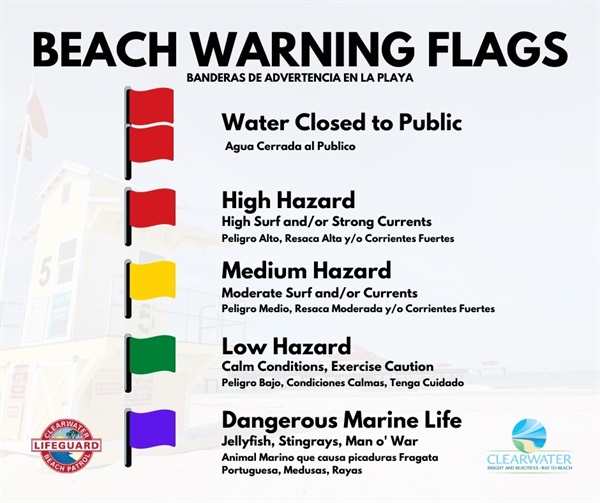
Double red means no one goes in the water — not a suggestion, a closure. Water conditions can change quickly, so check with the lifeguard on duty if you’re unsure. Purple flags are worth taking seriously too — see the stingray shuffle tip below.
Good to know: Avoid swimming for 24–48 hours after heavy rainfall. Runoff affects water quality, and the Gulf can look calm while still carrying elevated bacteria levels after a storm.
Water Safety: What You Need to Know
Lightning — Leave the Water Immediately
Florida weather moves fast. When thunder roars, get out of the water and off the beach. If you can hear thunder, lightning is close enough to be a threat. Don’t wait to see it. This isn’t overcaution — it’s one of the more serious risks people underestimate on Florida beaches.
Rip Currents — Don’t Fight Them
If you get caught in a rip current, don’t try to swim straight back to shore against it. You’ll exhaust yourself. Instead, swim parallel to the shoreline — following the beach — until you’re out of the current’s pull. Then swim back to shore at an angle, away from the current. Wave for a lifeguard if you need help. The most important thing: don’t panic.
Do the Stingray Shuffle
Stingrays are generally not aggressive, but they will defend themselves if stepped on. From the moment you enter the water until the moment you leave, shuffle or slide your feet slowly through the sand rather than lifting and stepping. This gives stingrays a chance to move out of your way. If you do get stung, see a lifeguard or head to a nearby fire station for an injury assessment.
No Headfirst Diving
Don’t dive headfirst into the water, especially in unfamiliar areas. Striking the bottom can cause serious, permanent injuries including paralysis. If you want to dive, check the depth first and always go in feet first on your initial entry. The same caution applies when body surfing — always extend a hand ahead of you.
Don’t Float Where You Can’t Swim
Non-swimmers using floats or inflatables to go offshore is more dangerous than it looks. If they fall off in deeper water, the situation can turn serious fast. The only safe exception is wearing a Coast Guard-approved life jacket. If you’re not a confident swimmer, stay in shallow water where you can stand.
Boating and Jet Skis
Boaters and jet skiers are not permitted inside the Safe Bathing Limit — the designated swimming area that extends 300 feet from the high water line. This is a safety boundary, not a suggestion. If you’re renting a watercraft, know where the swim zones are before you go out.
Beach Hours and Lifeguard Coverage
The beach itself is open 24 hours a day, 7 days a week. There’s no curfew for being on the sand, though the lack of lighting at night means most people wrap up well before dark.
Lifeguards are on duty from 10 a.m. to 5 p.m., seven days a week. The number of staffed towers can vary depending on the season, crowd levels, and weather. Outside of those hours, you’re swimming at your own risk — no lifeguard on duty means exactly that.
Stick to the designated bathing area, which extends roughly 300 feet west of the high water line and is clearly marked by buoys or pilings. Always follow the advice and instructions of lifeguards on duty.
Pier 60 Park hours: The park is open daily from 6 a.m. to 9 p.m.
Frequently Asked Questions
Can I bring a cooler to Clearwater Beach?
Yes, you can bring a cooler — but it cannot contain alcohol. Non-alcoholic drinks, snacks, and food are fine. Just leave the glass containers at home.
Can I bring my own beach umbrella and chairs?
Yes. You’re welcome to bring your own setup. There’s no charge for setting up your own gear in the public area.
Is Clearwater Beach free to access?
The beach itself is free. Parking is not, unless you use the free park-and-ride service from downtown or find street parking outside the immediate beach area.
Are there restrooms and showers at Clearwater Beach?
Yes. Public restrooms and outdoor rinse showers are available near the main beach access points, including near Pier 60.
What’s the best time of year to visit Clearwater Beach?
March through May and September through November tend to offer the best balance of warm water, manageable crowds, and lower humidity. Summer (June–August) is hot and can bring daily afternoon thunderstorms — standard for Florida’s Gulf Coast, but something to plan around. Winter months are mild but the water gets cooler.
Is Clearwater Beach good for families?
The Gulf side of Florida generally has calmer water than the Atlantic coast, and Clearwater Beach is no exception. The water near shore is typically shallow and gentle, which makes it easier for younger kids. The Pier 60 area has good amenities, and the nightly Sunsets at Pier 60 celebration is a solid low-key option for evenings with children.
Are beach wheelchairs available at Clearwater Beach?
Yes. The city provides free manual and motorized beach wheelchairs for visitors who need them. Check myclearwater.com for details on how to access one before your visit.
Rules and information are sourced from the City of Clearwater (myclearwater.com). Beach regulations — confirm current details on the City of Clearwater’s official website before your visit.